


CharacterHub: OCs, Art, Lore
4.711.00 Reviews
App Specs
- Version
- 1.296
- Updated On
- License
- Free
- Downloads
- 10,000+
- Developer
- CharacterHub
- Categories
- Art & Design
- Platform
- Android
Screenshots
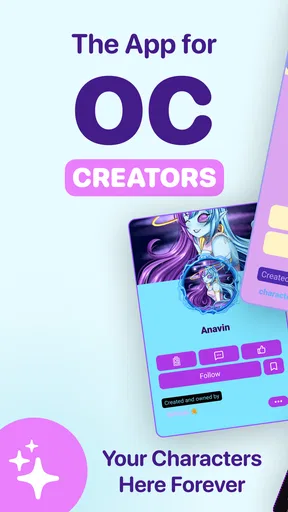
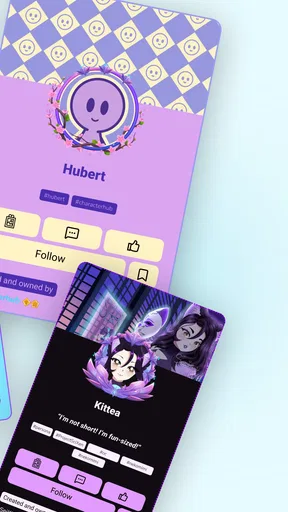
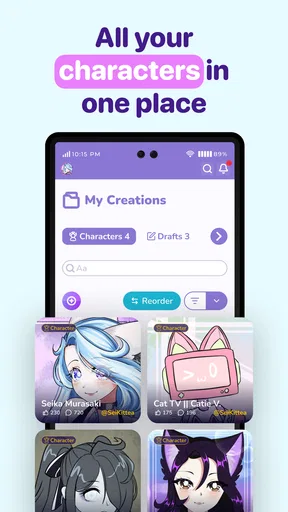
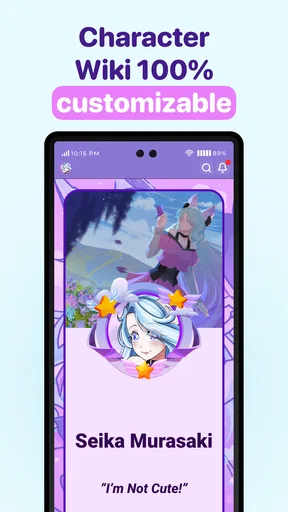
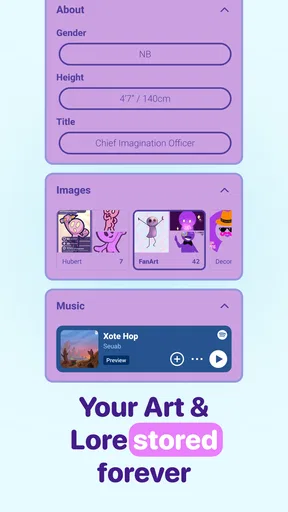
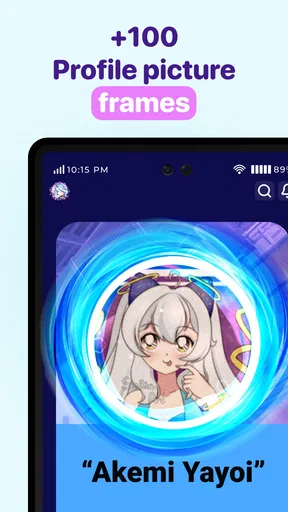
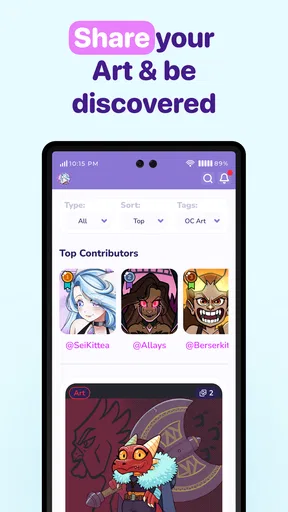
 Analysis by AppCompare
I came away from CharacterHub: OCs, Art, Lore feeling that it is less about making a single polished illustration and more about giving original characters a place to live. That distinction matters. If you create characters for comics, role-playing campaigns, fan communities, writing projects, or simply for fun, the app offers a focused home for the ideas that usually end up scattered across image folders, notes, and social posts.
CharacterHub is a free Art & Design app from CharacterHub, aimed at people who want to make, organize, and share original characters and the worlds around them. I found its appeal strongest when I treated each character as an ongoing project rather than a finished picture. The app makes more sense as a character portfolio and lore workspace than as a replacement for a full drawing program.
Its current store rating is a 4.7 average from around 68 ratings, with 10K+ installs. Those numbers suggest a small but interested community rather than a massive social network, which matches the experience: the concept feels specialized and personal. It is free to install, carries a Teen content rating, and includes optional purchases ranging from $0.99 to $199.99 per item. That last point is worth keeping in mind before spending money, especially if you only want a lightweight place to save ideas.
How the current version feels in everyday use
I find the everyday value of CharacterHub less in any single feature than in the way it can keep a character’s art and notes connected as an idea changes. In this section, I look at how that approach fits into ordinary creative routines and why a little organization can save time when you return to an old concept. That leads into what I make of the app’s current version.
A workspace for characters instead of isolated drawings
The most useful mental shift is to stop thinking of the app as a conventional sketchbook. A sketchbook is usually organized around pages or images. CharacterHub is built around the character as the central subject. That makes it a better fit for a hero whose appearance changes over time, a villain with several forms, or a role-playing character whose personality and history are just as important as their outfit.
I like this approach because character creation rarely happens in a straight line. I might start with a color palette, then write a few personality notes, then draw a rough portrait, then decide that the character needs a different backstory. Keeping those pieces connected is more practical than maintaining separate notes and gallery folders. The app’s value appears when a character is still unfinished and needs room to develop.
It also suits creators who share work in stages. Instead of waiting until every detail is perfect, you can use a character profile as a central presentation point for an evolving idea. That is especially handy for artists who want feedback, writers who need visual references, and role-players who want a character concept that can be revisited between sessions.
Worth Reading Before You Choose

EA SPORTS FC Mobile 26 Is a Bigger Football Game, but It Takes Time

Flipboard Shows What News Apps Must Do Beyond the Feed

Switching to Android Auto Means Rethinking Your Driving Routine

Google Calendar Makes a Crowded Week Easier to Manage

Ludo King Makes the Most of the Minutes Between Plans

Baby Panda World Brings Quick Play to Modern Phones, but Its Game Library Feels Busy
A realistic workflow for a busy creator
Imagine you are commuting home with a new character idea. You have a name, a rough visual concept, and one strong personality trait, but no finished illustration. With a traditional notes app, you might save the text in one place and the reference image somewhere else. Later, you may remember the mood but forget why the character was designed that way.
With CharacterHub, I would begin by creating the character as soon as the idea appears, then add the rough description before trying to make it presentable. I would use the profile as a working document: appearance notes first, background details next, and artwork only when it is ready. This workflow prevents a common problem in character design, where a good visual idea loses its original context.
A useful habit is to separate facts from possibilities. I would keep established details such as age, role, relationships, and visual traits together, while marking uncertain ideas in the lore text as possibilities rather than treating them as canon. That makes the profile easier to revise later and helps when the character grows into a comic, game concept, or collaborative story.
Where the app fits beside drawing tools
People coming from a drawing app should set their expectations carefully. A dedicated illustration tool is normally better for brushes, layers, precise editing, and finishing a complex image. CharacterHub’s strength is the surrounding organization: the identity of the character, the supporting text, the references, and the way the idea can be shared as a whole.
For that reason, I would use a drawing app to produce the artwork and CharacterHub to give that artwork context. This combination is more effective than asking one app to do everything. A finished portrait without notes may look good but remain difficult to use later. A well-organized character page can preserve the decisions behind the portrait, which is valuable when you return to the design months afterward.
It also differs from a general cloud gallery. A gallery is excellent for storing images, but it does not naturally explain who a character is, what they want, or how their design has changed. CharacterHub is more specialized because it treats those details as part of the creative object rather than as unrelated captions.
Sharing is useful when context matters
The sharing angle is one of the app’s more interesting qualities. Posting an image alone asks viewers to interpret it from appearance. Sharing a character with background, personality, and artistic references gives them a way into the idea. That can make feedback more specific: people can respond to the design, the story, or whether the visual choices support the character’s role.
I would be selective about what I publish, though. A profile can contain unfinished concepts, personal writing, or details intended only for a private project. Before sharing, I would review every section as if a stranger were seeing it for the first time. Removing rough notes that no longer represent the character can make the final presentation clearer without requiring a new drawing.
The smaller community is both a benefit and a limitation. A focused audience can be more relevant than a huge general feed, because people interested in original characters are more likely to understand why a minor costume detail or relationship note matters. At the same time, creators looking for constant activity or broad exposure may find the experience quieter than a major art platform.
What the recent version tells me about the product
A version number can be a useful point of reference, but I care more about whether a creative workspace remains practical as a collection grows. Here, I consider what the current release suggests about treating CharacterHub as an evolving place for character projects, while keeping sensible habits around updates and long-term creative work.
Version 1.296 suggests an active product rather than a finished monument
The current version is 1.296, while the app’s release date is listed as June 29, 2026. I read that combination as a sign that the product is being treated as an evolving service rather than a one-time utility. That is encouraging for an app centered on community and creative organization, because those experiences usually improve through repeated refinement.
Still, a version number alone does not tell me which parts have changed or whether every creator will notice a difference. I would not assume that a newer version automatically solves the specific friction I care about. The practical test is whether the current build makes it easier to maintain profiles, present art, and return to old character ideas without confusion.
For someone already using the app, the main effect of ongoing development is likely to be continuity. A creator with many characters benefits more from dependable access and predictable organization than from a flashy new option. Before making CharacterHub the only home for important work, I would keep original artwork and long-form writing backed up elsewhere. That is good creative housekeeping, especially when an app is still developing.
What existing users should review after updating
If you already have profiles, I would take a few minutes to inspect older characters rather than assuming everything is arranged exactly as before. Check whether descriptions still read correctly, whether artwork appears where you expect it, and whether public-facing details match your current intentions. This is not a criticism of CharacterHub specifically; it is a sensible routine for any app that stores evolving creative projects.
I would also use an update as an opportunity to clean up naming. Consistent character names, clear distinctions between alternate versions, and a simple convention for unfinished concepts make a large collection easier to navigate. For example, separating “draft,” “reference,” and “canon” in your own wording can prevent an early experiment from being mistaken for the final design.
Creators who collaborate should be even more deliberate. A shared character can accumulate contradictory details when several people edit or reinterpret it. Before inviting others to use a profile, I would establish which information is fixed and which parts are open to contribution. The app can provide a central place for the material, but the creative rules still need to come from the people using it.
The hidden strength is continuity of thought
The non-obvious advantage I noticed is not simply storage. It is continuity. When a character’s visual design and written identity remain together, later decisions become easier to explain. You can ask whether a new accessory supports the character’s personality, whether a color change reflects a story event, or whether a redesign has accidentally removed an important visual cue.
This is particularly useful for creators who repeatedly abandon and revive projects. A character that seemed weak six months ago may become useful after a new story idea appears. If the original concept is preserved with its reasoning and references, you can recover it instead of rebuilding it from memory. That makes the app valuable even when you are not actively publishing.
Another practical insight is to treat profiles as design briefs. Before commissioning art or asking a collaborator for help, gather the character’s essential traits, visual boundaries, and story purpose in one place. This reduces vague instructions and makes it easier for someone else to understand what must remain consistent.
Where friction may remain
The app’s focused nature may feel restrictive to someone who wants a full production pipeline. If your main goal is frame-by-frame animation, advanced photo manipulation, detailed painting, or professional asset management, a specialist tool will probably serve you better. CharacterHub can support the concept behind those projects, but it should not be mistaken for the entire studio.
There is also a commitment involved in maintaining profiles. A character hub is only useful when the information stays readable and current. If you create a profile once and never return to it, the organizational benefit fades. People who prefer quick, disposable sketches may find the extra structure unnecessary.
The optional purchase range also deserves a careful approach. The app is free to install, but the presence of items from $0.99 up to $199.99 means I would not tap through purchases casually. For younger users, the Teen rating and the possibility of in-app spending make a conversation about device purchase controls sensible. The free starting point is inviting, but it should not be confused with every part of the experience being cost-free.
The community side may not suit everyone either. A creator who wants a broad audience for polished digital paintings might get better results from a large general art network. CharacterHub makes more sense when the character itself is the product of interest, including the story and design decisions that surround the image.
Who should try it, and who should choose something else
I would recommend it to original-character artists, writers who design visually, role-players, comic creators, and anyone who repeatedly loses track of character notes. It is especially appealing if you enjoy developing a cast over time rather than producing disconnected illustrations. The Teen rating also gives families a clear starting point for deciding whether the community and creative material are appropriate for a particular user.
I would be less enthusiastic for someone who only needs a private folder for finished images. A standard gallery or cloud storage service may be faster and simpler for that job. Likewise, if your priority is sophisticated drawing control, use a dedicated art application first and consider CharacterHub as a companion rather than a replacement.
Writers should think about the length and complexity of their projects. The app is a natural fit for character-centered notes, but a large novel may still need a dedicated writing or knowledge-management system. I would keep the concise character-facing material in CharacterHub and store long chapters, research, and revision history in a tool designed for extended documents.
What I would watch as the product develops
The most important thing to watch is whether the app continues improving the balance between creative freedom and organization. More options are not automatically better. The best future changes would help users find old characters, distinguish alternate versions, present lore clearly, and share work without turning every profile into a cluttered form.
I would also pay attention to how the community develops. A specialized network does not need to be enormous to be useful, but it does need enough activity for creators to receive meaningful interaction. The current install base of over 10K points to an early-stage audience, so expectations should remain realistic: this is not the place I would choose solely for guaranteed reach.
For existing users, consistency matters more than novelty. Reliable handling of artwork, clear presentation, and a stable way to maintain character information would have the greatest effect on long-term trust. I would rather see careful improvements to those foundations than a stream of features that make profiles harder to manage.
My final take after using it as a character notebook
CharacterHub: OCs, Art, Lore works best when you want your characters to be more than images. I found its strongest use in connecting appearance, personality, history, and presentation so that an idea remains understandable as it changes. That makes it a thoughtful choice for creators building original worlds, keeping a cast organized, or sharing work with people who care about the story behind the design.
It is not the right tool for every art task. I would pair it with a drawing app for serious illustration, keep backups of important material, and approach the optional purchases with care. I would also avoid expecting the reach of a huge social platform. Those limits are real, but they do not undermine the central idea.
If you often say, “I have a character for that,” and then struggle to find the notes, references, or old sketches later, this free app is worth trying. Its best contribution is simple: it gives unfinished ideas a structured place to grow. For me, that is more useful than another gallery filled with images whose stories have been forgotten.
Pros
- Excellent for organizing original characters
- lore
- artwork
- and story details.
- Customizable character profiles help present creative projects in one place.
- Useful browsing tools make discovering other creators and characters easy.
- Supports community interaction through sharing
- feedback
- and creator engagement.
- A good fit for writers
- artists
- and roleplayers building detailed fictional worlds.
Cons
- The large amount of user content can make high-quality work difficult to find.
- Some features may feel overwhelming for new users unfamiliar with OC communities.
- Community feedback and engagement can vary greatly between individual profiles.
- Content quality and presentation depend heavily on each creator’s effort.
- Users may need to manage privacy carefully when sharing unfinished creative work.
FAQs for CharacterHub: OCs, Art, Lore
What is CharacterHub: OCs, Art, Lore used for?
CharacterHub: OCs, Art, Lore is designed for artists, writers, roleplayers, and fans who want to organize and present original characters in one place. You can create character profiles, add artwork, write biographies and backstories, record relationships, and develop detailed worldbuilding lore. It works especially well as a personal reference library or as a way to share creative projects with other users.
Can I create and customize original character profiles?
Yes. The app focuses on building detailed original-character profiles, allowing you to combine names, descriptions, images, personality traits, histories, abilities, relationships, and other information. The exact customization options may depend on the current version and account features, but the overall experience is intended to be flexible enough for simple character sheets as well as extensive profiles connected to larger stories or fictional universes.
Can I upload artwork and share my characters with other people?
CharacterHub is built around presenting characters and creative projects visually, so users can generally add artwork and publish profiles for others to view. Public sharing can be useful for receiving feedback, finding inspiration, or showing commissions and personal projects. Before uploading, review the visibility and privacy settings carefully, particularly if your characters include unfinished work, commissioned art, or material you do not want publicly accessible.
Is CharacterHub suitable for organizing worldbuilding and story lore?
The app is not limited to basic character information. It can also be useful for organizing lore, locations, timelines, factions, relationships, and story details connected to your original characters. This makes it appealing to users developing novels, comics, roleplaying campaigns, or personal universes. However, people working on very large projects may still prefer a dedicated writing or database tool alongside the app.
Is CharacterHub: OCs, Art, Lore free to download, and does it require an account?
The application may be available to download without an upfront purchase, but some features, storage options, or community functions can depend on the current plan and platform version. An account may be required for saving content online, synchronizing projects, commenting, or publishing profiles. Check the official Google Play Store or App Store listing for the latest pricing, subscription details, supported devices, and account requirements before downloading.


